
Platinum Tree Financial
  • SERVICES
    • BUSINESS OWNERS
      • FINANCIAL ADVICE
      • RISK MANAGEMENT PLANNING
      • INSURANCE PLANNING
      • SUCCESSION PLANNING
      • EMPLOYEE BENEFITS
        • HEALTH BENEFITS
        • RETIREMENT BENEFITS
        • HEALTH SPENDING ACCOUNT
    • INCORPORATED PROFESSIONALS
      • FINANCIAL ADVICE
      • HEALTH SPENDING ACCOUNT
    • INDIVIDUALS & FAMILIES
      • FINANCIAL ADVICE
      • RISK MANAGEMENT PLANNING FOR YOUNG FAMILIES
      • RISK MANAGEMENT PLANNING FOR RETIREES & MATURE FAMILIES
      • INSURANCE PLANNING
    • INSURANCE
      • INSURANCE PLANNING FOR FAMILIES
      • INSURANCE PLANNING FOR BUSINESS OWNERS
      • DISABILITY
      • CRITICAL ILLNESS
      • LIFE
        • PERSONAL
        • CORPORATE
      • HEALTH INSURANCE
      • LONG TERM CARE INSURANCE
      • TRAVEL INSURANCE
      • CREDITOR INSURANCE
    • RISK MANAGEMENT
      • YOUNG FAMILIES
      • RETIREES AND MATURE FAMILIES
      • BUSINESS OWNERS
    • TAX DRIVEN STRATEGIES
      • INSURED RETIREMENT PROGRAM
      • SHARED OWNERSHIP CRITICAL ILLNESS
      • IMMEDIATE FINANCING ARRANGEMENT
      • CORPORATE ESTATE BOND
  • ABOUT
    • ABOUT
    • SUPPLIERS
    • PRIVACY & WEBSITE TERMS OF USE
  • NEWS
  • CONTACT
  • Menu Menu

Archive for category: 2022

2022 Year End Tax Tips and Strategies for Business Owners

December 6, 2022/in 2022, 2022 Only, Blog, business owners, Financial Planning, tax/by Platinum Tree Financial

Now that we’re approaching the end of the year, it’s time to review your business finances. We’ve highlighted the most critical tax-planning tips you need to know as a business owner.

Salary/Dividend Mix

As a business owner, an essential part of tax planning is determining if you receive salary or dividends from the business.

When you’re paid a salary, the corporation can claim an income tax deduction, which reduces its taxable income. You include this pay in your personal taxable income. You’ll also create Registered Retirement Savings Plan (RRSP) contribution room. 

The alternative is the corporation can distribute a dividend to you. The corporation must pay tax on its corporate income and can’t claim the dividend distributed as a deduction. However, because of the dividend tax credit, the dividend typically pays a lower tax rate (than for salary) on eligible and non-eligible dividends. 

In addition to paying yourself, you can consider paying family members. These are the main options you can consider when determining how to distribute money from your business:

  • Pay a salary to family members who work for your business and are in a lower tax bracket. This enables them to declare an income so that they can contribute to the CPP and an RRSP. You must be able to prove the family members have provided services in line with the amount of compensation you give them.

  • Pay dividends to family members who are shareholders in your company. The amount of dividends someone can receive without paying income tax on them will vary depending on the province or territory they live in.

  • Distribute money from your business via income sprinkling, which is shifting income from a high-tax rate individual to a low-rate tax individual. However, this strategy can cause issues due to tax on split income (TOSI) rules. A tax professional can help you determine the best way to “income sprinkle” so none of your family members are subject to TOSI.

  • Keep money in the corporation if neither you nor your family members need cash. Taxes can be deferred if your corporation retains income and the corporation’s tax rate is lower than your tax rate.

No matter what strategy you take to distribute money from your business, keep in mind the following:

  • Your marginal tax rate as the owner-manager.

  • The corporation’s tax rate.

  • Health and payroll taxes

  • How much RRSP contribution room do you have?

  • What you’ll have to pay in CPP contributions.

  • Other deductions and credits you’ll be eligible for (e.g., charitable donations or childcare or medical expenses).

Compensation

Another important part of year-end tax planning is determining appropriate ways to handle compensation. Compensation is financial benefits that go beyond a base salary.

These are the main things to consider when determining how you want to handle compensation:

  • Can you benefit from a shareholder loan? A shareholder loan is an agreement to borrow funds from your corporation for a specific purpose and offers deductible interest.

  • Do you need to repay a shareholder loan to avoid paying personal income tax on your borrowed amount? 

  • Is setting up an employee profit-sharing plan a better way to disburse business profits than simply paying a bonus?

  • Keep in mind that when an employee cashes out a stock option, only one party (the employee OR the employer) can claim a tax deduction on the cashed-out stock option.

  • Consider setting up a retirement compensation arrangement (RCA) to help fund your or your employee’s retirement. 

Passive Investments

One of the most common tax advantages available to Canadian-controlled private corporations (CCPC) is the first $500,000 of active business income in a CCPC qualifies for the small business deduction (SBD), which reduces the corporate tax rate by 12 to 21 percent, depending on the province or territory. 

With the SBD, you can reduce your corporate tax rate, but remember that the SBD will be reduced by five dollars for every dollar of passive investment income over $50,000 your CCPC earned the previous year.

The best way to avoid losing any SBD is to ensure that the passive investment income within your associated corporation group does not exceed $50,000.

These are some of the ways you can make sure you preserve your access to the SBD:

  1. Defer the sale of portfolio investments as necessary.

  2. Adjust your investment mix to be more tax efficient. For example, you could hold more equity investments than fixed-income investments. As a result, only 50% of the gains realized on shares sold are taxable, but investment income earned on bonds is fully taxable.

  3. Invest excess funds in an exempt life insurance policy. Any investment income earned on an exempt life insurance policy is not included in your passive investment income total. 

  4. Set up an individual pension plan (IPP). An IPP is like a defined benefit pension plan and is not subject to the passive investment income rules.

Depreciable Assets

Consider speeding up the purchase of depreciable assets for year-end tax planning. A depreciable asset is a capital property on which you can claim Capital Cost Allowance (CCA).

Here’s how to make the most of tax planning with depreciable assets:

  • Make use of the Accelerated Investment Incentive. This incentive makes some depreciable assets eligible for an enhanced first-year allowance.

  • Purchase equipment such as zero-emissions vehicles and clean energy equipment eligible for a 100 percent tax write-off.

  • Consider postponing the sale of a depreciable asset if it will result in recaptured depreciation for your 2022 taxation year.

Qualified Small Business Corporation (QSBC) Share Status

Ensure your corporate shares are eligible to get you the $913,630 (for 2022) lifetime capital gains exemption (LCGE). The LCGE is $1,000,0000 for dispositions of qualified farm or fishing property.

Suppose you sell QSBC shares scheduled to close in late December 2022 to January 2023. In that case, you may want to consider deferring the sale to access a higher LCGE of $971,190 for 2023 and therefore defer the tax payable on any gain arising from the sale.

Consider taking advantage of the LCGE and restructuring your business to multiply access to the exemption with other family members. But, again, you should discuss this with us, your accountant and legal counsel to see how this can benefit you. 

Donations

Another essential part of tax planning is to make all your donations before year-end. This applies to both charitable donations and political contributions.

For charitable donations, you need to consider the best way to make your donations and the different tax advantages of each type of donation. For example, you can:

  • Donate Securities

  • Give a direct cash gift to a registered charity

  • Use a donor-advised fund account at a public foundation. A donor-advised fund is like a charitable investment account.

  • Set up a private foundation to solely represent your interests.

We can help walk you through the tax implications of these types of charitable donations.

Get year-end tax planning help from someone you can trust!

We’re here to help you with your year-end tax planning. So book a meeting with us today to learn how you can benefit from these tax tips and strategies.

Contact Us
https://platinumtreefinancial.ca/wp-content/uploads/2022/12/2022-Year-End-Tax-Tips-for-Business-Owners-from-Financial-Tech-Tools-on-Vimeo.png 708 1345 Platinum Tree Financial https://platinumtreefinancial.ca/wp-content/uploads/2020/03/platinumTreeEnfold.jpg Platinum Tree Financial2022-12-06 10:27:132022-12-07 12:10:362022 Year End Tax Tips and Strategies for Business Owners

2022 Alberta Budget Highlights

February 25, 2022/in 2022, Blog/by Platinum Tree Financial

Alberta 2022 Budget Highlights

On February 24, 2022, the Alberta Minister of Finance announced Alberta’s 2022 budget. This article highlights the most important things you need to know.

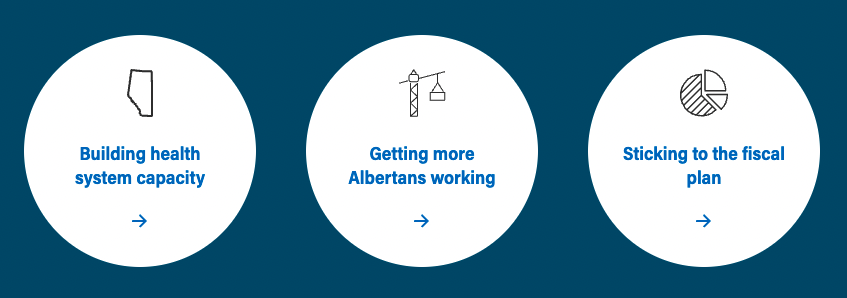
Increasing The Capacity Of The Health Care System

Budget 2022 commits to adding a total of $1.8 billion to the Alberta health care budget by 2024-2025. This money will be spent to help put in place new mental health and addiction support, attract new physicians to remote areas, strengthen Emergency Medical Services, and address pandemic-related health costs and surgical backlogs.

Budget 2022 also commits to investing over $750 million in health care capital. This money will be used to create new inpatient beds for cancer patients, increase surgical capacity, upgrade the Red Deer Regional Hospital Centre, and provide additional treatment spaces for mental health.

Supporting Albertans To Get Back To Work

Budget 2022 is committed to helping Albertans get back to work. Budget 2022 commits $171 million to this goal over three years. This money will be used to help increase enrollment spaces in areas that have skill shortages, including technology, finance, energy, engineering, health, and aviation. Budget 2022 also commits to providing support for increasing training opportunities for vets and commercial drivers, apprenticeship programs, and training opportunities for Indigenous Peoples.

Another goal of Budget 2022 is to support Albertans seeking employment or looking to advance their careers. Budget 2022 commits over $100 million to expand skills development and training opportunities, address barriers to employment, and provide financial support options to low-income students in high-demand programs.

Committing To The Fiscal Plan

Budget 2022 is Alberta’s second balanced budget in over a decade. Total revenue for the province for 2022-2023 is estimated to be $62.6 billion in 2022-23, and total overall expenses in 2022-23 will be $62.1 billion.

No Changes To Corporate or Personal Tax Rates

Budget 2022 does not include any changes to the province’s corporate tax rates or personal tax rates.

We can help!

We can help you assess the impact of this year’s budget on your finances or business. Give us a call today!

https://platinumtreefinancial.ca/wp-content/uploads/2022/02/alberta2022Budget.png 298 847 Platinum Tree Financial https://platinumtreefinancial.ca/wp-content/uploads/2020/03/platinumTreeEnfold.jpg Platinum Tree Financial2022-02-25 09:26:012022-02-25 09:39:132022 Alberta Budget Highlights

TFSA versus RRSP – What you need to know to make the most of them in 2022

February 1, 2022/in 2022, Blog, rrsp, Tax Free Savings Account/by Platinum Tree Financial

TFSA versus RRSP – What you need to know to make the most of them in 2022

TFSAs and RRSPs can be significant savings vehicles. To help you understand their differences, we have put together this article to compare:

  • TFSA versus RRSP – Differences in deposits

  • TFSA versus RRSP – Differences in withdrawals

TFSA versus RRSP – Difference in deposits

There are four main areas to focus on when comparing differences in deposits for 2022:

  1. Contribution Room

  2. Carry Forward

  3. Contributions and Tax Deductibility

  4. Tax Treatment of Growth

How much contribution room do I have?

If you have never opened a TFSA before, you can contribute up to $81,500 today. This table outlines the contribution amount you are allowed each year since TFSAs were created, including this year:

For RRSPs, the contribution limit is always 18% of your previous year’s pre-tax earnings to a maximum of $29,210. For example, if you earned $60,000 in 2021 then your contribution limit for 2022 would be $10,800 (18% x $60,000). If you earned $200,000, your contribution limit would be capped at the maximum of $29,210.

How much contribution room can I carry forward?

If you choose not to contribute to your TFSA at all one year or do not contribute the maximum amount in a year, you can indefinitely carry forward your unused contribution room. The only restrictions on this are that you must be a Canadian resident, older than 18, and have a valid social insurance number. In addition, if you make a withdrawal, the amount you withdrew is added to your annual contribution room for the following calendar year.

For an RRSP, you can carry forward your unused contribution room until the age of 71. When you turn 71, you must convert your RRSP into an RRIF. If you make a withdrawal from your RRSP, you do not open up any additional contribution room.

Contributions and Tax Deductibility

Your TFSA contributions are not tax-deductible and are made with after-tax dollars. Your RRSP contributions are tax-deductible and are made with pre-tax dollars.

Tax Treatment of Growth

One of the reasons it is essential to make both RRSP and TFSA contributions is that investment value growth is treated differently.

A TFSA is more suitable for short-term objectives like saving for a house down payment or a vacation because the investment value growth is tax-free. In addition, when you make a withdrawal from your TFSA, you will not have to pay income tax on the amount withdrawn.

The growth in an RRSP is tax-deferred, meaning you will not pay any taxes on your RRSP gains until you withdraw money from your future RRIF account; the account you convert your RRSP into at age 71. As a result, RRSPs are better suited for long-term objectives, like retirement. In addition, since you will have a lower income in retirement than when you are working, you will be in a lower tax bracket and not pay much tax on your RRIF income.

TFSA versus RRSP – Differences in withdrawals

There are four main areas to focus on when comparing differences in withdrawal for 2022:

  1. Conversion Requirements

  2. Tax Treatment

  3. Government Benefits

  4. Contribution Room

Conversion Requirements

For a TFSA, there are never any conversion requirements as there is no maximum age for a TFSA. However, if you have an RRSP, you must convert it to a Registered Retirement Income Fund (RRIF) if you turn 71 by December 31st of 2022.

Tax Treatment Of Withdrawals

One of the most attractive things about a TFSA is that all your withdrawals are tax-free! This ability to withdraw funds tax-free is why TFSAs are advantageous for short-term goals; you don’t have to worry about taxes when you take money out to pay for a house or a dream vacation.

With an RRSP, if you make a withdrawal before converting it to a RRIF, it will be taxed as income except in two cases:

  1. The Home Buyers Plan lets you withdraw up to $35,000 tax-free, but you must pay it back within fifteen years.

  2. The Lifelong Learning Plan lets you withdraw up to $20,000 ($10,000 maximum per year) tax-free, but you must pay it back within ten years.

How will my government benefits be impacted?

If you are withdrawing from your TFSA or RRSP, it is essential to know how your withdrawals can impact any benefits you receive from the government.

Since TFSA withdrawals are not considered taxable income, they will not impact your eligibility for income-tested government benefits.

RRSP withdrawals are considered taxable income and can affect the following:

  • Income-tested tax credits such as Canada Child Tax Benefit, the Working Income Tax Benefit, the Goods and Services Tax Credit, and the Age Credit.

  • Government benefits including Old Age Security, Guaranteed Income Supplement and Employment Insurance.

How will a withdrawal impact my contribution room?

If you make a withdrawal from your TFSA, then the amount you withdrew will be added on top of your annual contribution room for the following calendar year. However, if you withdraw money from your RRSP, you do not open up additional contribution room.

The Takeaway

RRSPs and TFSAs can both be great savings vehicles. With this in mind, understanding the differences between these two types of tax-advantaged accounts can help you better plan for future purchases and your eventual retirement.

https://platinumtreefinancial.ca/wp-content/uploads/2022/02/TFSA-vs-RRSP-2022.png 281 500 Platinum Tree Financial https://platinumtreefinancial.ca/wp-content/uploads/2020/03/platinumTreeEnfold.jpg Platinum Tree Financial2022-02-01 07:00:002022-02-01 11:23:20TFSA versus RRSP – What you need to know to make the most of them in 2022

2022 Financial Calendar

January 4, 2022/in 2022, Blog, Financial Planning/by Platinum Tree Financial

2022 Financial Calendar

Welcome to our 2022 financial calendar! This “at a glance” document lists important dates, including when government benefits are distributed and tax filing deadlines.

Be sure to bookmark this or add the dates listed to your personal calendar so you’re always in the loop!

Use our calendar to make sure you keep on track with your financial goals and avoid missing any critical tax or investment deadlines.

If you’re looking for help with your taxes, tax packages will be available in February 2022, so reach out to your accountant or us to book an appointment and get started on your taxes!

Important Dates

Dates to know:

  • January 1 is when the contribution room for your TFSA opens again. The maximum contribution for 2022 is $6,000.

  • The government will issue GST/HST credit payments on January 5, April 5, July 5, and October 5.

  • Canada Child Benefit payments (CCB) will be issued on the following dates: January 20, February 18, March 18, April 20, May 20, June 20, July 20, August 19, September 20, October 20, November 18, and December 13.

  • The government will issue CPP and OAS payments on the following dates: January 27, February 24, March 29, April 27, May 27, June 28, July 27, August 29, September 27, October 27, November 28, and December 21.

  • The final date for your RRSP contributions to be eligible for the 2021 tax year is March 1, 2022.

  • Bank of Canada’s interest rate announcements will be on January 26, March 2, April 13, June 1, July 13, September 7, October 26, and December 7.

  • May 2, 2022, is the last day to file personal income taxes, and tax payments are also due by this date. This is also the filing deadline for final returns if death occurred between January 1 and October 31, 2021.

  • May 3 to June 30 – The filing deadline for final tax returns if death occurred between November 1 and December 31. The due date for the final return is six months after the date of death.

  • The tax deadline for all self-employment returns is June 15, 2022. Any balance owing, however, is due May 2, 2022.

  • The deadline for final RESP, RDSP, and TFSA contributions is December 31.

  • December 31 is also the deadline for 2022 charitable contributions.

  • December 31 is also the deadline for individuals who turned 71 in 2022 to finish contributing to their RRSPs and convert them into RRIFs.

https://platinumtreefinancial.ca/wp-content/uploads/2022/01/2022.png 281 500 Platinum Tree Financial https://platinumtreefinancial.ca/wp-content/uploads/2020/03/platinumTreeEnfold.jpg Platinum Tree Financial2022-01-04 07:00:002022-01-04 07:06:052022 Financial Calendar

Book a Meeting

Search Blog Posts

Search Search

Latest News

  • What Happens to Your Group Benefits When You Leave a Job?October 1, 2026 - 9:03 am
  • Empowering Your Family’s Financial Future: A Comprehensive Guide to BudgetingSeptember 1, 2026 - 11:25 am
  • You Just Inherited Money: What to Do FirstAugust 3, 2026 - 1:07 pm

Categories

  • 2020
  • 2020 Only
  • 2021
  • 2022
  • 2022 Only
  • 2023
  • 2024
  • 2025
  • 2026
  • Accountants
  • Blog
  • Business Owners
  • business owners
  • buy sell
  • Center of Influences
  • Charitable Gifting
  • Coronavirus
  • Coronavirus – Associates
  • Coronavirus – Practice Owners
  • Coronavirus – Retired
  • Coronavirus – Retiring
  • Coronavirus – Students
  • corporate
  • critical illness insurance
  • Debt
  • dental benefits
  • disability
  • disability insurance
  • Estate Planning
  • Families
  • Family
  • farmers
  • financial advice
  • Financial Planning
  • Government Budget
  • Group Benefits
  • health benefits
  • incorporated professionals
  • individuals
  • Insurance
  • Investment
  • life insurance
  • long term care
  • mortgage
  • pension plan
  • personal finances
  • Professional Corporations
  • Professionals
  • rdsp
  • Registered Education Savings Plan
  • Retirees
  • retirement
  • rrsp
  • tax
  • Tax Free Savings Account
  • travel insurance

Adrian Belcourt

Financial Advisor
T: (780) 850-8020
E: Adrian@platinumtreefinancial.ca

About

Educate, Empower, Enjoy

Latest News

  • What Happens to Your Group Benefits When You Leave a Job?October 1, 2026 - 9:03 am
  • Empowering Your Family’s Financial Future: A Comprehensive Guide to BudgetingSeptember 1, 2026 - 11:25 am
  • You Just Inherited Money: What to Do FirstAugust 3, 2026 - 1:07 pm
©2020 Financial Tech Tools Inc. | Privacy Statement and Terms of Use
  • Link to LinkedIn
  • Link to Facebook
  • Link to LinkedIn
  • Link to LinkedIn
Scroll to top Scroll to top Scroll to top